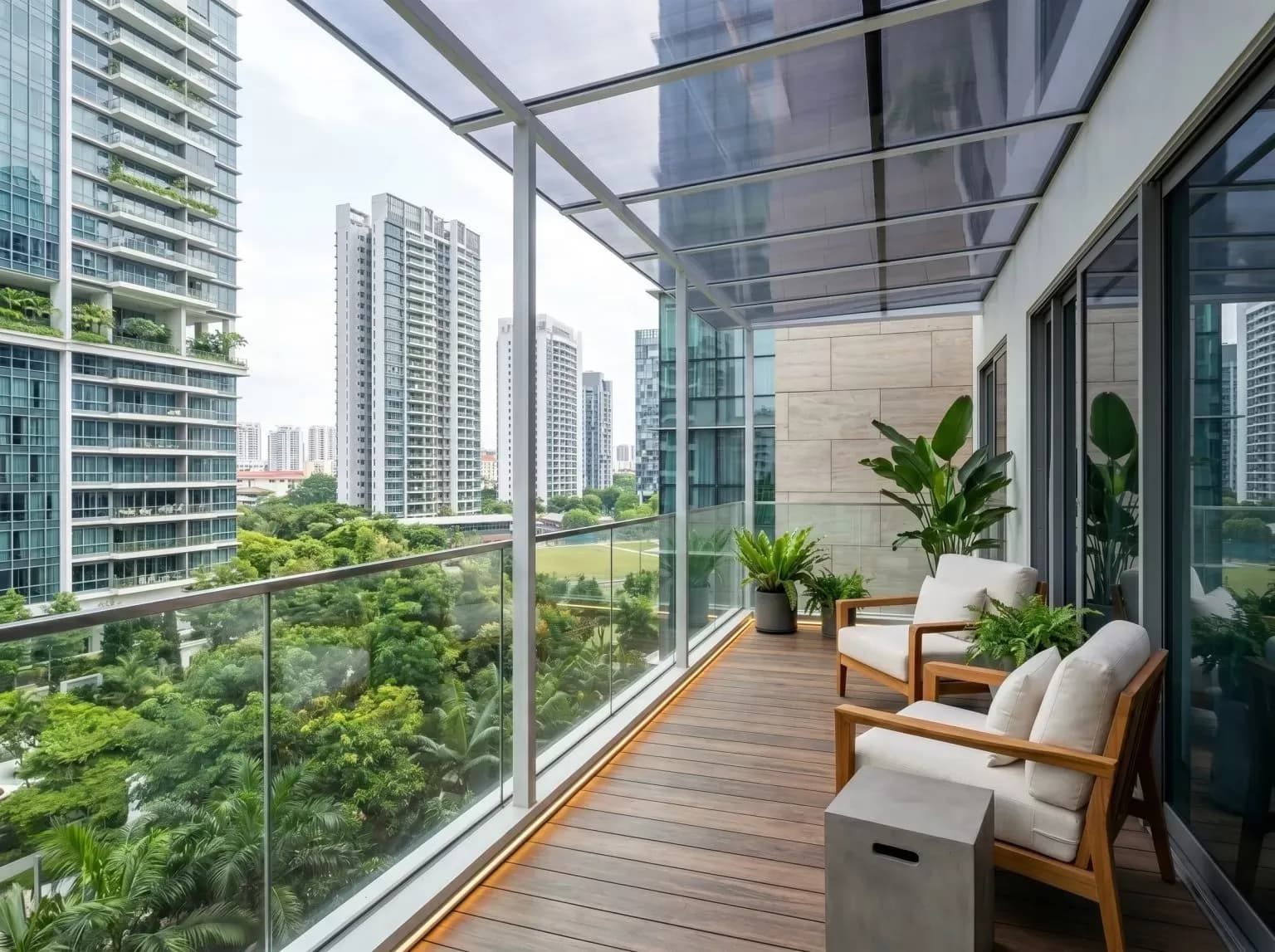
Why Outdoor Roofing in Singapore Needs Special Attention
Singapore's climate is unforgiving. We get around 2,300mm of rain annually, sudden monsoon squalls, and intense UV radiation all year round. An outdoor roof that works well in a temperate country will fail here within a few years if it is not specified correctly.
Whether you are covering a car porch, patio, walkway or commercial outdoor area, the right outdoor roofing system must handle three things: heavy rain, strong sun, and constant humidity. It also needs to allow airflow so heat does not build up underneath.
In this guide, we break down the most common outdoor roofing options in Singapore, compare their pros and cons, and explain what to look for before you commit.
1. Polycarbonate Roofing
Polycarbonate sheets are one of the most popular choices for patios and car porches in Singapore. They are lightweight, impact-resistant, and can be clear, tinted or opaque.
Pros
- Lets natural light through while blocking harmful UV rays
- Lightweight, so less structural support is needed
- Good impact resistance — handles hail and falling branches
- More affordable than glass
Cons
- Can discolour over time if low-grade sheets are used
- Less premium look compared to glass
- Can be noisy during heavy rain unless insulated panels are used
Best for: Car porches, patios, walkways and budget-conscious projects.
2. Aluminium Roofing
Aluminium roofing panels are rust-proof, lightweight and highly durable. They are a strong choice for coastal areas where salt air accelerates corrosion.
Pros
- Will not rust — ideal for Singapore's humid climate
- Low maintenance and long lifespan
- Clean, modern appearance
- Good heat reflection when powder-coated in light colours
Cons
- Does not let light through
- Higher upfront cost than polycarbonate
- Can be noisy in heavy rain without insulation
Best for: Homeowners who want a permanent, low-maintenance roof with a sleek finish.
3. Glass Roofing
Tempered glass roofing delivers a premium, open feel. It is often used for courtyards, upscale patios and commercial entrances.
Pros
- Unmatched aesthetic appeal
- Lets in maximum natural light
- Does not discolour or yellow
- Adds significant property value
Cons
- Expensive — both material and structural support
- Heavy, requires robust framing
- Can cause heat build-up if not specified with low-E glass
- Requires regular cleaning to stay clear
Best for: Landed properties and commercial spaces where design is a priority.
4. Retractable Roofing
Retractable roofs let you open up your outdoor space on sunny days and close it instantly when rain arrives. They are motorised and often come with remote or smart-home control.
Pros
- Maximum flexibility — shade when you want it, open sky when you don't
- Great for entertaining areas
- Can be integrated with rain sensors
Cons
- Highest cost among common options
- More moving parts means more maintenance
- Requires a power source
Best for: Homeowners who want versatility and are willing to invest in a premium system.
5. Awning and Canopy Roofing
Fabric awnings and metal canopies are lightweight, affordable and quick to install. They are often used over windows, entrances and small outdoor seating areas.
Pros
- Low cost and fast installation
- Retractable options available
- Good for temporary or semi-permanent shade
Cons
- Fabric can fade or tear over time
- Less rain protection than solid roofs
- Not suitable for large spans
Best for: Windows, small patios and budget shade solutions.
Key Factors to Consider Before You Buy
Rain Protection
Singapore's rain is often wind-driven, meaning it falls at an angle. Your roof needs proper overhangs, flashings and drainage to prevent water from blowing in. Gutters and downpipes must be sized correctly.
Heat and Ventilation
A roof that traps heat will turn your patio into an oven. Choose materials with good heat reflection, and design for airflow. Ridge vents, gaps and open sides all help.
Structural Support
Glass and tile roofs are heavy and need robust framing. Polycarbonate and aluminium are lighter. Always have a professional assess whether your existing structure can take the load.
Maintenance
Ask yourself how much upkeep you are willing to do. Aluminium and glass need occasional cleaning. Polycarbonate may need replacement sheets after 10–15 years. Fabric awnings need fabric replacement sooner.
Approvals
For HDB flats and condominiums, you may need approval from the town council or management corporation. Landed properties may fall under URA guidelines on covered areas. Always check before installing.
Cost Guide for Outdoor Roofing in Singapore
Prices vary widely based on size, material and complexity. As a rough guide:
- Polycarbonate: $80–$150 per square metre
- Aluminium: $120–$220 per square metre
- Glass: $250–$450 per square metre
- Retractable: $400–$800 per square metre
- Awnings: $150–$400 per square metre
These figures include supply and installation but not structural works or electrical connections. Always get a fixed quotation after a site survey.
Why Professional Installation Matters
Outdoor roofing is not a DIY job. Incorrect falls, poor flashing details or inadequate fasteners will lead to leaks — often within the first heavy monsoon. A professional installer will:
- Measure your site accurately
- Recommend the right material for your exposure
- Ensure proper drainage and flashing
- Use corrosion-resistant fixings
- Provide a workmanship warranty
Final Thoughts
The best outdoor roofing for your Singapore home depends on your budget, design preferences and how you plan to use the space. Polycarbonate and aluminium offer the best balance of cost and durability for most homeowners. Glass and retractable systems are premium choices for those who want a standout outdoor area.
If you are unsure, get expert advice. BH Supply Pte Ltd provides free site surveys and honest recommendations. Call or WhatsApp 8588 9230 to book yours.