Introduction: Working at Height in Singapore
Singapore is a high-rise city. Condominiums, office buildings and industrial facilities all need regular facade maintenance, waterproofing and repair work at height. Traditionally, this meant scaffolding. But in recent years, rope access has become the preferred method for many projects.
In this article, we compare rope access and scaffolding across cost, safety, speed and suitability to help building owners and property managers make the right choice.
What Is Rope Access?
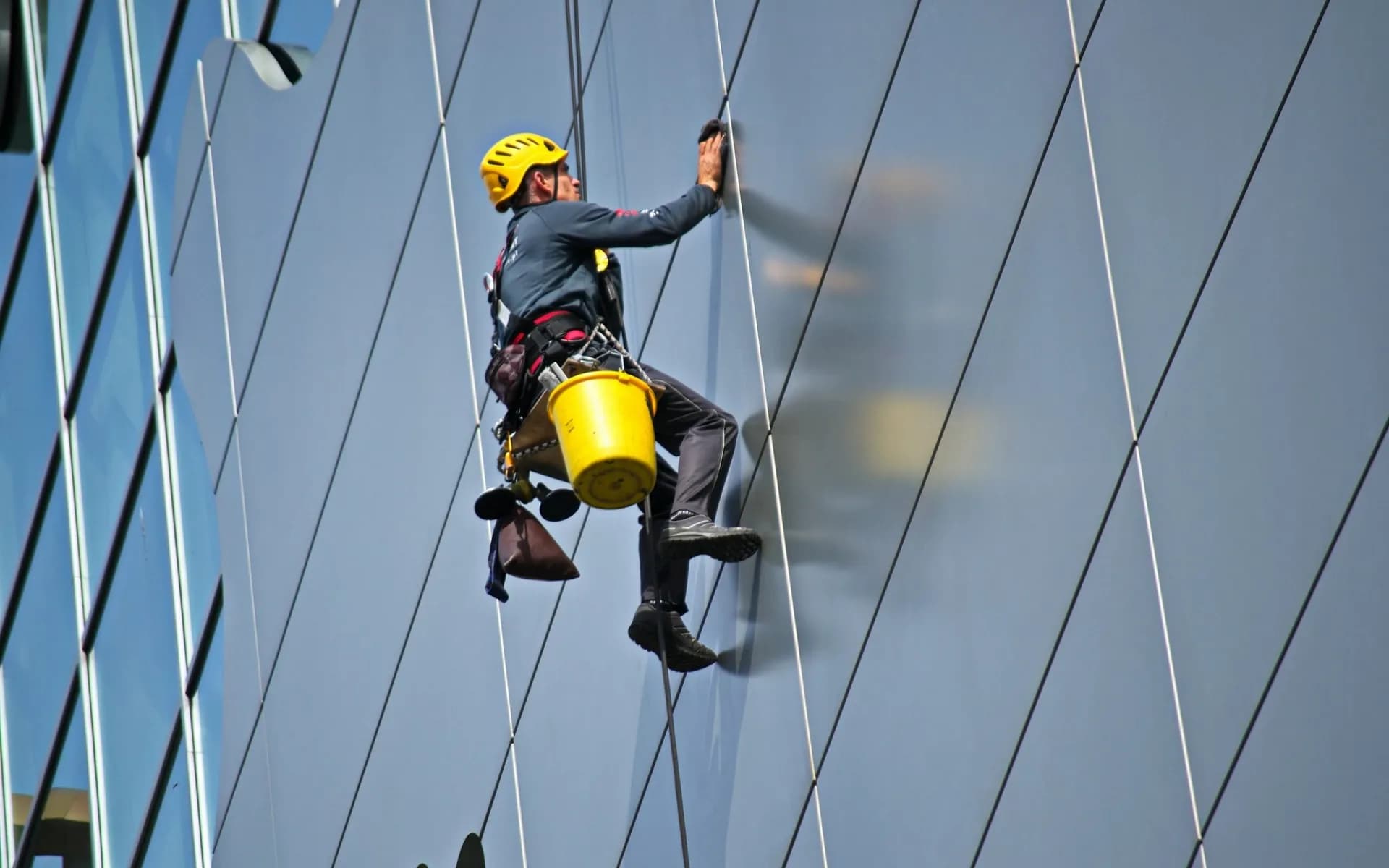
Rope access is a method of working at height using two independent rope systems. Technicians are suspended from the roof or a high anchor point and use specialised equipment to descend, ascend and position themselves on the facade.
Rope access technicians are certified — usually through IRATA (Industrial Rope Access Trade Association) — and work under strict safety protocols.
What Is Scaffolding?
Scaffolding is a temporary structure of metal poles and platforms erected around a building. Workers stand on the platforms to access the facade. Scaffolding can be free-standing or suspended.
1. Cost Comparison
Rope Access
Rope access is generally much cheaper than scaffolding. There is no need to erect, inspect, rent and dismantle a large temporary structure. Mobilisation is fast, and you only pay for the technicians and equipment.
Typical cost savings: 30–60% compared to scaffolding, depending on building height and scope.
Scaffolding
Scaffolding costs include design, erection, inspection, rental, and dismantling. For a tall building, this can run into tens of thousands of dollars before any actual repair work begins.
Hidden costs: Permit fees, road closures, disruption to residents, and longer project duration.
Winner: Rope access.
2. Mobilisation Time
Rope Access
A rope access crew can mobilise within days. They need only anchor points and a safe access route to the roof. No permits for road closure are usually required.
Time to start: 1–3 days.
Scaffolding
Scaffolding must be designed, approved, erected and inspected before work can begin. This can take weeks, especially for complex buildings.
Time to start: 2–6 weeks.
Winner: Rope access.
3. Safety
Rope Access
Rope access is statistically very safe when performed by certified technicians. The dual-rope system means there is always a backup. Technicians are trained in rescue procedures.
Key safety factors: Certification, equipment inspection, method statements, risk assessments.
Scaffolding
Scaffolding is also safe when erected and maintained correctly. However, it is prone to issues like missing guardrails, unstable footing, and falling objects. It also creates a risk for the public below.
Key safety factors: Regular inspections, proper tagging, fall protection for workers.
Winner: Tie — both are safe when done properly.
4. Disruption to Building Users
Rope Access
Rope access causes minimal disruption. Technicians work from ropes, so there is no need to block walkways, close roads or restrict access to units. Work can often be done without residents even noticing.
Scaffolding
Scaffolding blocks windows, reduces natural light, and can restrict access to balconies. It may also require road closures and parking restrictions.
Winner: Rope access.
5. Scope of Work
Rope Access Is Ideal For:
- Facade inspection and repair
- External wall waterproofing
- Sealant replacement
- Painting and coating
- Window and glass cleaning
- Gutter clearing
- Minor structural installation
- Signage mounting
Scaffolding Is Better For:
- Large-scale renovation covering entire facades
- Heavy structural work requiring multiple workers and materials
- Projects where the building has no suitable anchor points for ropes
- Work that requires a stable platform for heavy equipment
Winner: Depends on the project. Rope access covers most maintenance and repair tasks.
6. Insurance and Compliance
Both methods require proper insurance and compliance with Singapore's Workplace Safety and Health (WSH) regulations. Rope access companies should have IRATA certification and provide method statements and risk assessments. Scaffolding companies must comply with Singapore Standards for scaffolding.
Always ask for proof of certification and insurance before engaging a contractor.
When to Choose Rope Access
- Your building is high-rise and scaffolding would be costly
- You need facade repairs, waterproofing or painting
- You want minimal disruption to residents
- You need the work done quickly
- There are suitable anchor points on the roof
When to Choose Scaffolding
- You are doing a full building renovation
- Heavy materials need to be moved up and down
- The building has no safe anchor points
- The work requires many workers on the facade simultaneously
Final Thoughts
For most high-rise maintenance and repair work in Singapore, rope access is the faster, cheaper and less disruptive option. It is safe when performed by certified professionals and is suitable for a wide range of tasks.
BH Supply Pte Ltd provides IRATA-certified rope access services across Singapore, including facade repair, waterproofing, sealing and painting. Call or WhatsApp 8588 9230 to discuss your project.